Project Finance by Major Banks: What LOIs Mean for Lithium Juniors
June 8, 2026
AI Meets Geology: Why $20M Is Reshaping the Exploration Market
June 8, 2026
When Names Build Trust That Data Alone Cannot
Mining investors have long operated by a simple rule: “Fund the jockey, not the horse.” The logic is straightforward. Experienced investors judge a project less by its geology than by the people steering it. But this principle cuts both ways, including for retail investors analyzing a junior financing round. The identity of who leads a capital raise for a small lithium explorer tells you something real about what lies ahead.
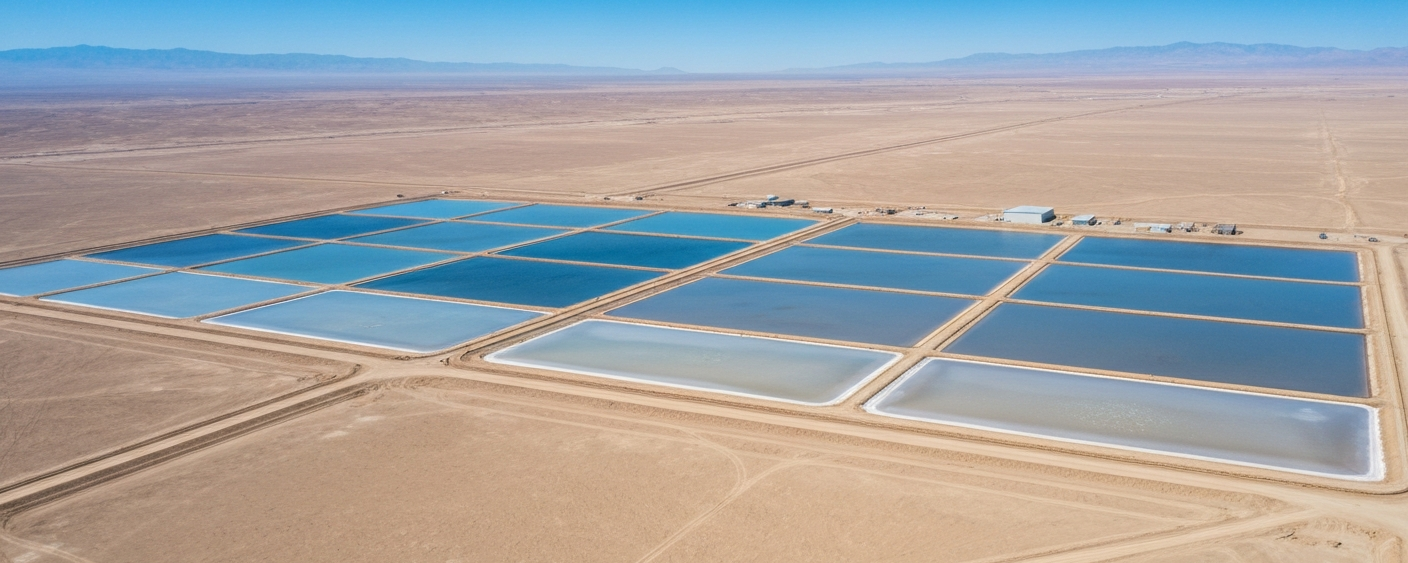
A Canadian-listed company with a lithium project in Nevada recently announced strategic equity financing led by two figures with deep industry roots: the founder of one of the largest lithium acquisitions in the past ten years, and the Chief Investment Officer of an investment firm specializing in royalty agreements. For readers new to junior mining, this announcement offers a window into why such funding rounds are called “strategic” and what separates them from ordinary equity offerings.
Capital comes in different forms
Junior exploration projects attract three kinds of money, and they’re not interchangeable:
- Retail capital: Individual investors buying shares on the open market. This money is liquid but sends few signals about the business. It chases price movements.
- Institutional capital: Funds operating under fixed mandates. They do their homework, but their participation mostly reflects sector allocation decisions, not conviction about a specific project.
- Strategic capital: Industry insiders, royalty companies, and proven entrepreneurs putting their reputation at stake. This is the rarest and most legible form of backing.
Strategic investors typically arrive with three things in hand: a specific exit milestone they want to reach (here, a construction phase decision); networks that unlock follow-on financing; and credibility that attracts other investors. A prominent insider’s participation doesn’t guarantee success, but it does narrow the information gap between management and the market. Someone with skin in the game and a track record has already done the due diligence.

Two distinct investor types, one message
The Nevada round stands out because of who anchors it. The first lead is an entrepreneur with a completed lithium exit. In concrete terms: this person took a junior project through every stage of development to acquisition by a larger company, and shareholders made money in the process. The industry calls such people “value creators” because their record is measurable.
The second lead has roots in royalty financing. Royalty companies provide capital in exchange for a percentage of future revenue, not equity ownership. They get paid only if the mine produces, regardless of whether it’s profitable. An investor thinking in royalties judges a project on whether it will ever actually produce metal, not simply whether the next drill hole will be encouraging.
The combination of both types in a single round reads as follows: this project isn’t chasing quarterly exploration news. It’s being built toward a construction decision, with a clear roadmap for capital and lined-up institutional financing down the road.
| Investor type | What they want | What it signals |
|---|---|---|
| Lithium exit entrepreneur | Value creation through acquisition or mature production | Strong — reputation at stake |
| Royalty investor | Long-term mine production | Strong — they’ve vetted the geology and economics |
| Generalist fund | Sector exposure and diversification | Moderate — broad mandate, no deep project conviction |
| Retail investor (stock exchange) | Capital gains and liquidity | Weak — reacts, does not lead |
Nevada matters
Geography shapes valuation. Nevada ranks among the world’s most predictable mining jurisdictions. Permitting is transparent, legal protection is reliable, and U.S. policy now explicitly values domestic lithium. The Inflation Reduction Act makes American-sourced battery materials attractive to carmakers and cell manufacturers looking to lock in supply.
Two projects with identical geology will command different market prices if one sits in a stable legal system and the other in a politically uncertain country. This jurisdiction premium is measurable. It appears routinely in how comparable projects trade. For Nevada lithium, there’s another edge: the region has infrastructure and sits within the North American supply chain, which cuts development time and costs. Royalty investors weight this heavily.
A framework for analyzing any junior capital raise
The Nevada financing illustrates a method that beginners can apply to any junior company seeking money:
First, who leads? A lead investor with a sector track record carries more weight than an anonymous syndicate. Second, what’s the stated purpose? “Continue drilling” is vaguer than “fully finance through to construction.” Third, does the structure match the stage? Early projects take equity. Later ones attract royalty partners or strategic deals. The fit between capital type and project maturity says something about how real the next steps are.
What this doesn’t mean: the project will reach production, lithium will be profitable when it does, or no technical or regulatory surprises will occur. Strategic capital reduces risk. It doesn’t erase it.
The working lesson for beginners: in markets drowning in asymmetric information, the people putting their own money forward can be a useful first filter. Not a substitute for independent research, but a useful starting point.
Key terms for junior mining analysis
- Strategic equity financing
- A capital raise in which investors bring not just money but industry expertise, networks, or strategic involvement. Distinct from purely financial placements with no operational role.
- Lead investor
- The primary subscriber in a financing round, who negotiates price and terms. The lead investor’s background is considered the most important quality measure of the round.
- Royalty structure (NSR)
- A financing arrangement where an investor receives a percentage of future net revenue (Net Smelter Return) in exchange for capital, independent of production costs.
- Construction phase
- The development stage at which a company decides to build a mine or processing facility. Requires a positive feasibility study, permits, and committed financing.
- Jurisdiction premium
- The valuation premium a project receives from operating in a stable legal and regulatory environment. Projects in politically secure countries trade higher than those with equivalent geology in unstable ones.
- Exit strategy
- The path through which an early investor converts their stake to cash, typically through acquisition by a larger company, a spin-out, or the listing of a mature project.
- Information asymmetry
- The gap between what management and insiders know and what the market knows. Strategic investors with industry expertise can partially bridge this gap.
⚠️ Important notice: This article is for informational and educational purposes only. It does not constitute investment advice, a recommendation, or a solicitation to buy or sell any security. Investments in small-cap exploration and mining companies carry a high risk, including the potential total loss of capital. Before making any investment decision, consult a registered financial advisor and conduct your own analysis. Boersen Post Team is not responsible for decisions taken based on the content published here.