AI Meets Geology: Why $20M Is Reshaping the Exploration Market
June 8, 2026
District-Scale Relevance: How REE Juniors Stake Their Territory
June 8, 2026

When Electronic Scrap Becomes More Valuable Than Ore
The permanent magnets inside the electric motor of a hybrid vehicle contain neodymium, praseodymium, and dysprosium. These rare earths come almost entirely from China, where mining and processing are concentrated. When that vehicle reaches the end of its useful life after ten years, those magnets typically end up in a smelting furnace, and the metals they contain are lost. This is where a new business model enters: the targeted recycling of NdFeB magnets from industrial scrap.
A Canadian small-cap company, through its U.S. subsidiary, is beginning preparatory work for the commercial recovery of such magnets in North America. This suggests the topic is moving beyond pure research and into industrial-scale implementation. For investors watching the rare earths sector, this opens up a different valuation logic than what applies to conventional mine developers.
Supply Chains Under Geopolitical Pressure
To understand the recycling model, start with the baseline. Rare earths are not rare in the geological sense. They occur in Earth’s crust worldwide. The real problem is processing infrastructure. Separation, refining, and magnet manufacturing are technologically demanding and have been concentrated in China over decades. The U.S. Geological Survey reports that roughly 85 to 90 percent of global NdFeB magnet production comes from Chinese facilities.
Western governments have grown concerned about this dependency. The United States has placed rare earths on its Critical Minerals List. The EU has defined processing quotas under the European Critical Raw Materials Act. Canada is expanding support programs for domestic supply chains. The result is that projects reducing even part of this dependency receive political backing and sometimes financial support, whether through primary mining or recycling.
Recycling works alongside primary mining rather than replacing it. Even optimistic projections assume recycling will cover only a fraction of growing demand for rare earths in electric vehicles and wind power by 2040. Those who build capacity early in this niche can capture market share as demand rises.
The Mechanics Behind NdFeB Recycling
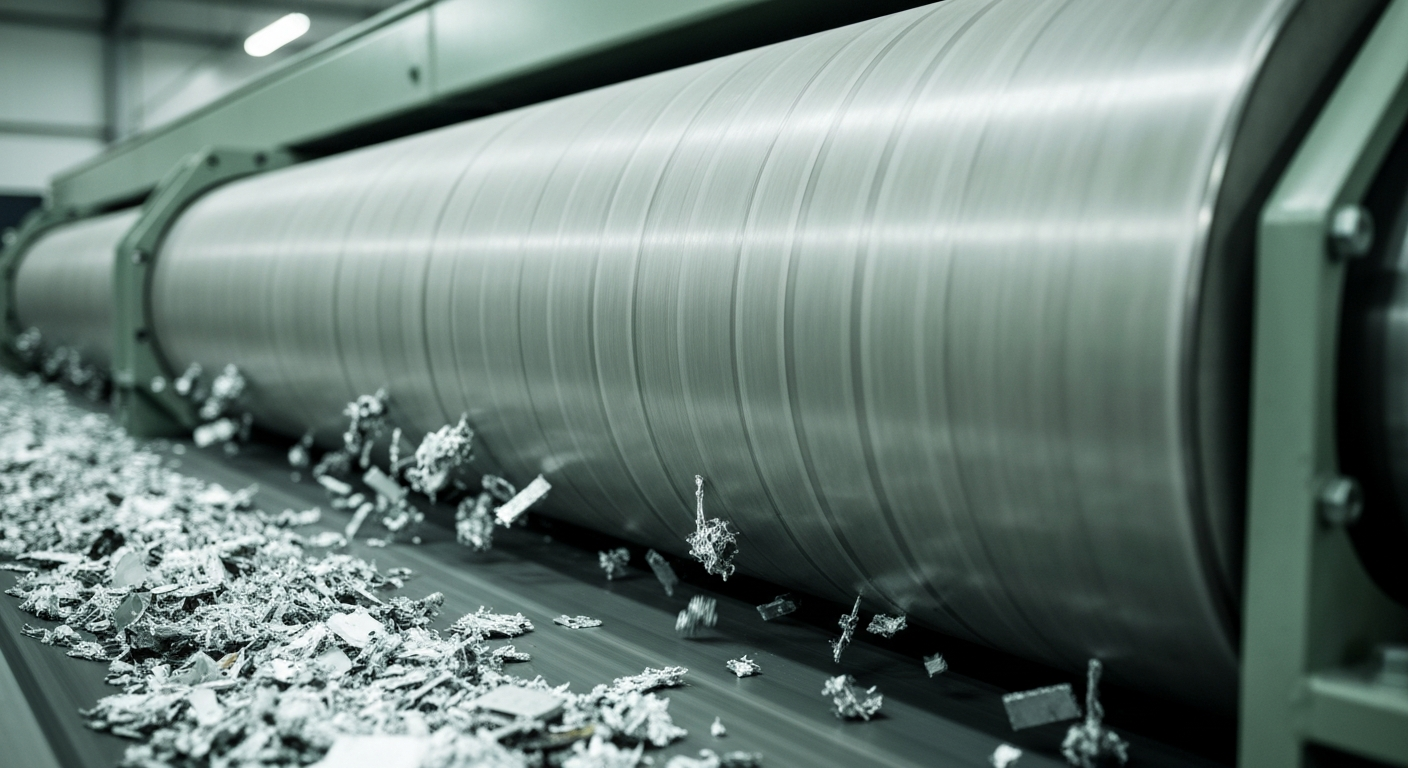
The core process is hydrogen decrepitation. NdFeB magnets are exposed to hydrogen and break down into a brittle powder that can then be processed chemically. This method is more energy-efficient than conventional hydrometallurgy and generates less wastewater. It was originally developed at the University of Birmingham and is being advanced toward commercial implementation.
The challenge extends beyond chemistry to logistics. A recycling facility needs a steady stream of feedstock: end-of-life magnets from industrial sources, electronic scrap processors, or automotive recyclers. Building these procurement channels often proves more demanding than constructing the facility itself. A copper mine knows where its ore reserves sit. A recycler must actively build a network that systematically captures and sorts scrap.
Purity matters as well. Recycled rare earth material must meet specifications to be used in new high-performance magnets. Impurities from nickel coatings or adhesives reduce the value of the final product. Quality control becomes a critical cost factor.
| Characteristic | Primary Exploration | Rare Earth Recycling |
|---|---|---|
| Raw material source | Geological deposit | Industrial scrap / end-of-life magnets |
| Primary risk | Geology and permits | Scrap supply and purity |
| Geopolitical dependency | High (processing in CN) | Medium (local processing possible) |
| Regulatory tailwind | Moderate to high | High (Critical Minerals, IRA) |
| Valuation logic | Resource size, grade, NPV | Throughput, feedstock security, opex |
What Investors Must Weigh Differently With This Model
For small-cap investors familiar with exploration projects, the recycling model requires different thinking. With a classic junior explorer, attention goes to resource classifications under NI 43-101: Inferred, Indicated, or Measured Resources. Larger tonnage and higher grade mean greater appeal. These metrics do not apply to urban mining.
Different questions matter instead. How stable is the feedstock supply? What offtake agreements exist with scrap suppliers? What are the operating costs per kilogram of recovered rare earth oxide? How quickly can the model scale without compromising quality?
Capital structure differs too. Recycling facilities are generally less capital-intensive than mines and reach production faster. This changes how milestones map to valuation compared to an exploration project waiting years for a production decision. The speculative “discovery premium” that comes with positive drill results does not exist here.
Regulatory rules also matter. The U.S. Inflation Reduction Act ties tax incentives for electric vehicles and battery components to localization requirements for raw materials and processing. Rare earth recycling done in the United States could benefit from these rules over time, provided facilities meet the requirements. This area remains actively regulated and subject to change.
Scrap as a Strategic Reserve
The basic point is clear: raw materials of the next decade are already embedded in today’s products. Building infrastructure to recover these materials creates a decentralized commodity reserve, independent of mining rights and ground risks.
This does not eliminate risk. Technical complexity, supply network construction, and dependence on production volumes in key industries (automotive, wind power, defense) are genuine sources of uncertainty. But as a complement to a primary rare earths project or as a standalone operation, the model offers a different profile than pure exploration. Those who build early may gain an advantage as supply chains evolve.
The emergence of commercial recycling projects in North America matters for investors trying to understand the rare earths sector beyond conventional mining. This is not a quick speculative event, but a medium- to long-term piece of the supply chain puzzle.
Key Terms Explained
- NdFeB Magnets
- Permanent magnets based on neodymium, iron, and boron. They are the most powerful commercially available permanent magnets and are used in electric motors, wind turbines, and hard drives.
- Hydrogen Decrepitation
- A recycling process in which NdFeB magnets are converted into a brittle powder through hydrogen absorption, which can then be further processed chemically. More energy-efficient than conventional acid-leach methods.
- Urban Mining
- The recovery of valuable materials from products already in circulation (electronic scrap, end-of-life vehicles, industrial waste) rather than from primary geological sources.
- Feedstock
- The input material for a processing facility. In the recycling context, it refers to the end-of-life magnets or scrap that is fed into the plant.
- Critical Minerals List
- Official lists published by governments (U.S., EU, Canada, and others) that classify certain raw materials as strategically critical because their supply is considered particularly at risk. Listing can trigger support programs and preferential regulatory treatment.
- NI 43-101
- Canadian regulatory standard for the public reporting of mineral resources and reserves. It strictly distinguishes between resources (Inferred / Indicated / Measured) and reserves (Probable / Proven).
- Inflation Reduction Act (IRA)
- U.S. legislation enacted in 2022 that ties tax incentives for electric vehicles and their battery components to localization requirements for raw materials and processing.
⚠️ Important notice: This article is for informational and educational purposes only. It does not constitute investment advice, a recommendation, or a solicitation to buy or sell any security. Investments in small-cap exploration and mining companies carry a high risk, including the potential total loss of capital. Before making any investment decision, consult a registered financial advisor and conduct your own analysis. Boersen Post Team is not responsible for decisions taken based on the content published here.