Uranium Target Generation: What Decides Success Before Drilling
June 16, 2026
Graphite Anode Material: How Junior Miners Are Opening Western Battery Markets
June 16, 2026
Scandium – a niche metal and what lies behind it
Some metals spend decades below the radar despite genuine strategic value, and scandium is a good example. This silver-gray lightweight metal rarely shows up in financial news or energy policy debates, even though metallurgists treat it as hard to replace in certain applications. When a junior company announces an update to its Definitive Feasibility Study (DFS) for an Australian scandium project, the announcement itself is less interesting than the project logic it points to — especially for those still getting their bearings in small-cap mining.
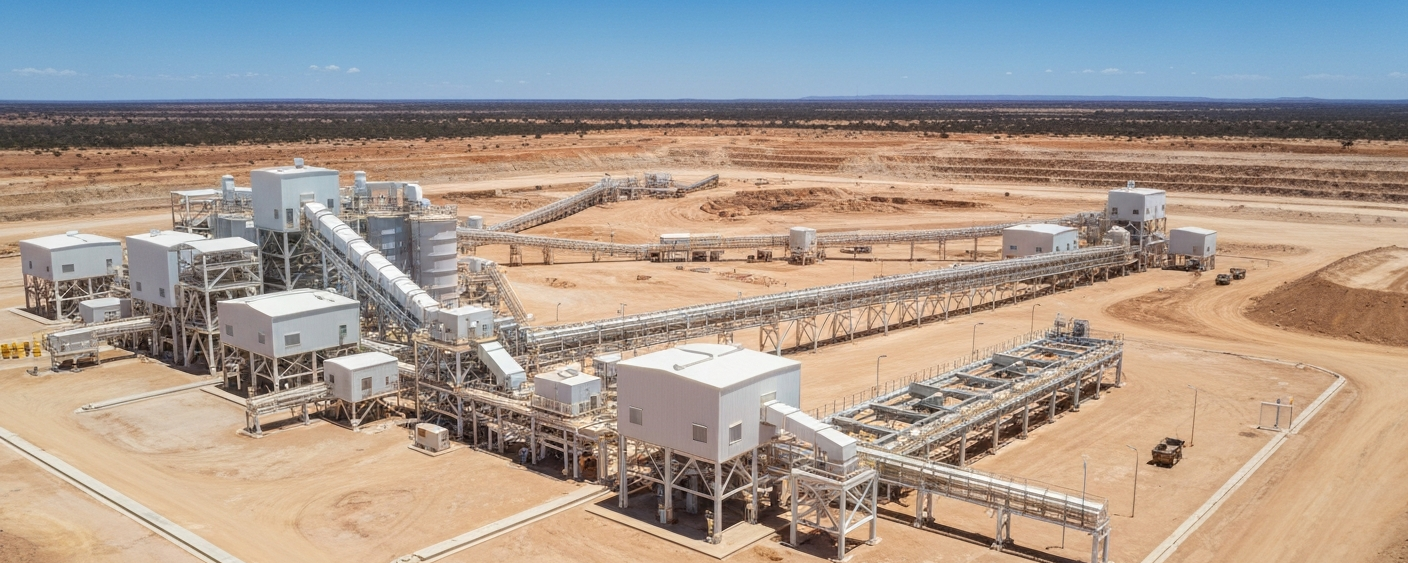
Australia, specifically New South Wales, is home to one of the most advanced scandium projects in the world. A Canadian-listed junior has spent years building the dataset that now lets it refresh a 2016 feasibility study against current cost levels. The update is being carried out by a specialized engineering firm, which lenders generally read as a sign that the numbers are meant to hold up under scrutiny.
From exploration project to a financeable study
To understand why a DFS update matters, it helps to look at how a mining project typically develops. Each phase carries a different level of capital commitment and risk:
- Scoping Study / PEA (Preliminary Economic Assessment): A first rough economic estimate with an accuracy range of ±35–50%. Used for project prioritization, not financing.
- Prefeasibility Study (PFS): A medium level of detail, typically ±25% accuracy. Gives management an initial basis for strategic decisions.
- Definitive Feasibility Study (DFS): The highest level of detail, with accuracy of ±15% or better. Forms the basis for project financing, bank lending, and strategic partnerships.
A DFS is the document that turns a mine from an exploration project into something a lender will look at seriously. Whether it is a commercial bank, a commodity trading house, or a development finance institution, most require exactly this document before they will discuss terms at all. For small-cap investors, the DFS marks an important threshold: below it, a project leans on equity markets; above it, institutional financing structures can enter the picture.

Why scandium creates particular market dynamics
Scandium is not a bulk commodity. The global market for scandium oxide runs to only a few hundred tonnes per year, a fraction of even other rare earths. The scarcity has a structural explanation: scandium occurs in Earth’s crust at concentrations similar to cobalt, but rarely in deposits concentrated enough to be extracted economically as a primary product. Today it comes mainly as a byproduct of aluminum or titanium processing, which makes supply erratic.
The main applications explain why Western governments have taken an interest:
| Application field | Why scandium? |
|---|---|
| Aluminum-scandium alloys | Small additions (0.1–0.5%) significantly improve strength and weldability — relevant for aerospace and e-mobility |
| Solid oxide fuel cells (SOFC) | Scandia-stabilized zirconia increases conductivity and service life — a growth area in clean energy production |
| Sports equipment / high-performance applications | High-strength, lightweight frames (bicycles, baseball bats) — currently a niche, but scalable if prices fall |
The core problem is familiar: potential buyers will not incorporate scandium into their materials planning as long as no reliable, long-term supply source exists outside China and Russia. Producers hold back because offtake is not guaranteed. This deadlock is common in small, illiquid commodity markets, and a well-documented project study is one way to address the supply side of it — though not the demand side.
What a DFS update means for investors
When a company updates an existing DFS rather than starting from scratch, that tells you something about the underlying project. The original technical work is considered sound; the geology, resource estimate, and process design are not being fundamentally revisited. What has changed is the cost environment. Steel, energy, and labor have all risen substantially since 2016, and any serious financing conversation requires a current cost basis.
For small-cap investors, a few practical points follow from this:
- Share price relevance: The announcement of a DFS update can attract attention because it signals concrete progress. Project maturity tends to get priced in abruptly rather than gradually.
- Dilution risk: DFS updates cost money. Engineering firms, laboratory analyses, and independent expert reports add up fast, and a junior company without revenues typically covers those costs by issuing new shares. The capital structure deserves close attention.
The lithium industry offers a useful comparison. Several Australian projects followed exactly this path — PEA to PFS to DFS to financing — in the late 2010s. Some reached production; others stalled in the study phase when lithium prices collapsed. A completed DFS opens the door to financing conversations. It does not guarantee anyone walks through it.
Niche metals and Western supply strategy
The EU has included scandium on its list of critical raw materials, and the U.S. critical minerals strategy flags it as strategically relevant despite its small market volume. The reasoning is simple: anyone wanting to manufacture high-performance alloys and next-generation fuel cells without depending on Asian supply chains needs primary sources elsewhere.
New South Wales is a politically stable mining region with good infrastructure. A financeable project there could anchor long-term supply for industrial buyers in Europe and North America, provided that market prices and demand trends cooperate. Price discovery for scandium oxide is, however, relatively opaque. There is no liquid futures market, and transactions are typically negotiated bilaterally between producers and buyers.
For investors watching small caps in critical niche markets, that opacity has two sides. Small markets can tip quickly into undersupply if a new demand source — say, a solid oxide fuel cell manufacturer scaling up production — unexpectedly builds volume. At the same time, demand is harder to forecast than in bulk markets like copper or nickel, where price signals are public and arrive in real time.
Key terms for project maturity analysis
- Definitive Feasibility Study (DFS)
- The highest accuracy level of a mine economic study (±15% or better). Forms the basis for project financing by banks and institutional lenders. Prepared by independent engineering firms.
- JORC Code
- The Australian-New Zealand-South African reporting standard for mineral resources and reserves, comparable to NI 43-101 in Canada. Distinguishes between Inferred, Indicated, and Measured Resources, as well as Probable and Proven Reserves.
- Final Investment Decision (FID)
- The formal decision by a company to proceed with mine construction. Typically requires a completed DFS, secured financing, and all necessary regulatory permits.
- Scandium Oxide (Sc₂O₃)
- The traded form of the metal scandium. The global market amounts to only a few hundred tonnes per year, with prices negotiated bilaterally. Primary applications are Al-Sc alloys and solid oxide fuel cells.
- Critical raw materials
- Materials classified by governments (EU, U.S., Australia) as strategically important due to high supply risk and/or significant economic importance. These lists are updated regularly.
- The supply-demand deadlock in niche metals
- A situation in which potential buyers will not commit to volumes because no secure supply exists, while producers will not invest because offtake is not guaranteed. Common in small, illiquid commodity markets.
- Project finance
- Lending based on the cash flows of the project itself, rather than on the balance sheet of the parent company. Requires financeable studies, resource estimates at Reserve level, and often offtake agreements.
⚠️ Important notice: This article is for informational and educational purposes only. It does not constitute investment advice, a recommendation, or a solicitation to buy or sell any security. Investments in small-cap exploration and mining companies carry a high risk, including the potential total loss of capital. Before making any investment decision, consult a registered financial advisor and conduct your own analysis. Boersen Post Team is not responsible for decisions taken based on the content published here.