District Effect: When One Mining Region Supports Many Copper Juniors
October 7, 2026
Soil Geochemistry: The Low-Cost Risk Filter Before Drilling
October 7, 2026
When a drill hole delivers more than expected
Anyone who evaluates an exploration project on a single metal price is already cutting corners. At many junior explorers in the base metals space, drill samples contain several economically interesting metals from the start — nickel alongside cobalt, sometimes zinc or copper in the same interval. Geologists call this a polymetallic system. For investors, it shifts the valuation logic and changes which types of buyers would realistically be interested in the project at all.
The geology explains why.
Why metals often occur together
Polymetallic deposits don’t form by accident. Magmatic fluids carry various metals through rock over millions of years. Temperature and pressure, along with the chemical composition of those fluids, determine where individual elements precipitate — sometimes in separate zones, sometimes practically on top of each other.
A well-documented case is magmatic sulfide systems of the kind found in certain greenstone belts across Canada. Nickel and cobalt turn up together there because both elements share similar geochemical behavior and concentrate in the same mineral phases, primarily pentlandite and pyrrhotite. Zinc and copper appear when hydrothermal overprinting has chemically altered the original magmatic ore. The result is a deposit with several overlapping metal components that are geologically connected rather than coincidentally co-located.
Knowing how a deposit formed helps assess whether further drilling is likely to hit similar combinations — or whether a given result was simply an anomaly.
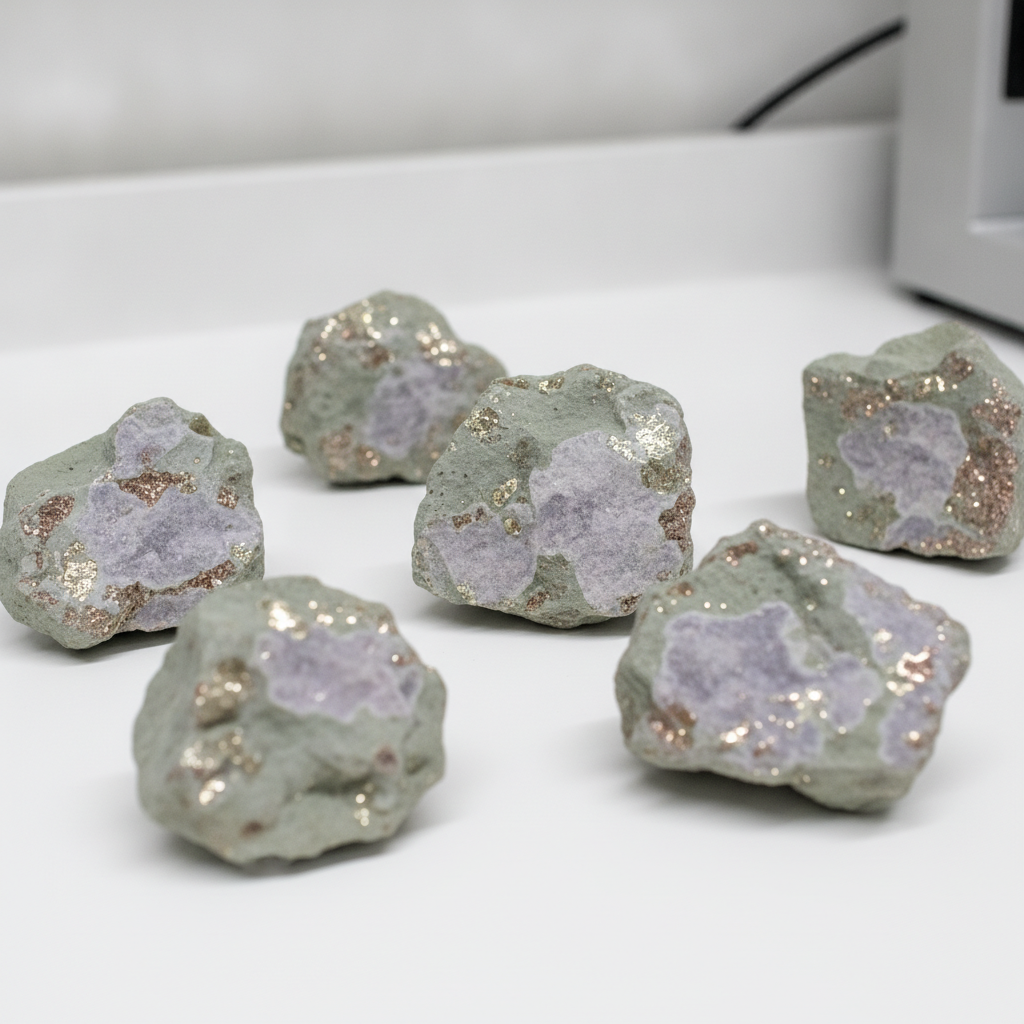
What multi-metal systems mean for valuation
For a pure gold explorer, the entire project value hangs on the gold price. If it drops 20 percent, the theoretical economics shrink accordingly, with nothing to cushion the fall. A polymetallic system works differently, though not always better.
When a junior explorer drills intervals containing nickel and cobalt and the ore also carries zinc, potential economic value is spread across multiple metal prices. A declining nickel price can be partially offset by a rising cobalt price — particularly when cobalt develops its own price dynamic driven by battery industry demand. That diversification is real, but it also means the project is harder to read quickly.
Such combinations are often expressed through metal equivalent values — NiEq or ZnEq, for example — where all metal grades in a sample are mathematically converted into a single reference metal based on current prices. This simplifies comparison, but the approach has a genuine weakness. It assumes that all contained metals are separable and individually marketable. With polymetallic ores, that is far from guaranteed, and the assumption tends to get buried in the small print.
| Project type | Price risk | Valuation complexity | Potential buyers |
|---|---|---|---|
| Single-metal (e.g., pure nickel) | High (one price decides) | Low | Steel industry, battery supply chains |
| Polymetallic (Ni-Co-Zn-Cu) | Lower (multiple prices) | High (metallurgy, offtake) | Multiple industrial sectors |
Metallurgy: not everything that shines can be separated
The biggest hurdle in polymetallic projects isn’t underground — it’s in the laboratory. Attractive grades in drill samples say nothing about whether the contained metals can be economically pulled apart in a processing plant.
In nickel-cobalt systems with additional zinc, this gets complicated fast. Zinc sulfides, primarily sphalerite, can be isolated reasonably well using flotation. Nickel and cobalt, however, are chemically close relatives and often require hydrometallurgical processes such as pressure oxidation or selective leaching — expensive, energy-intensive methods that look very different on a balance sheet than standard flotation. Whether a polymetallic system can actually be operated at a profit is only answerable once a PEA or feasibility study exists that includes real metallurgical test work, not just assay grades from drill core.
Wide intervals containing multiple metals are therefore an early signal. What they don’t tell you is whether those metals will ever be worth separating.
What polymetallic drill results signal to the market
When a junior explorer publishes polymetallic drill results, the market’s reaction is rarely straightforward. Investors focused on battery commodities zero in on cobalt and nickel; classic base metal investors look at zinc and copper. The analytical effort rises sharply. Which metal actually dominates the economics? What processing does the ore require? Which division of a major mining company would even be responsible if an acquisition were on the table?
A well-documented polymetallic system can widen the pool of potential partners. A major seeking cobalt for battery supply might be interested in the same project as a company that needs zinc for steel processing. That broader appeal can become price-relevant later in a project’s life, during an earn-in or an outright acquisition — but that’s a long way from where most press releases are written.
Early exploration results are no guarantee of resources, and resources are no guarantee of reserves. The path from initial assay results to a financeable feasibility study typically takes years and costs considerably more capital than the announcements imply.
What to look for in polymetallic projects
Polymetallic projects carry a different risk structure than single-metal ones, and better returns don’t follow automatically. The first question worth asking is whether drill results hold up across multiple holes or whether a single impressive interval is carrying the story. Metallurgical test data matters just as much: without it, there is no way to know whether the metals can be economically separated. And project stage matters more than most retail investors give it credit for — early exploration, resource estimation, and PEA are genuinely different milestones, not points on a smooth continuum.
Key terms for polymetallic systems
- Polymetallic deposit
- A mineral deposit where two or more economically relevant metals occur together in sufficient grades. Their simultaneous presence affects valuation, processing requirements, and the range of companies that might want to buy the project.
- Metallurgical separability
- The ability to economically isolate individual metals from a complex ore. Without it, multiple metals cannot be sold as separate products, even if they show up clearly in drill core.
- Metal equivalent (e.g., NiEq, ZnEq)
- A mathematical consolidation of multiple metal grades into a single value based on current metal prices. It simplifies comparison of polymetallic projects but assumes complete separability of all contained metals — an assumption that often goes unexamined.
- Assay
- A laboratory measurement that determines the percentage of a metal in a drill sample. Figures such as “0.081% Ni over 118 m” come from such analyses and do not constitute a resource estimate.
- PEA (Preliminary Economic Assessment)
- A preliminary economic study based on early exploration data. It provides an initial estimate of costs and revenues, but is not a financeable feasibility study.
- Resource vs. reserve (NI 43-101)
- Resources (Inferred, Indicated, Measured) describe geologically estimated mineral quantities. Reserves (Probable, Proven) are the portion of those resources for which economic extractability has been technically and economically demonstrated. The two terms are not interchangeable, though they are frequently treated as such in promotional materials.
- Earn-in
- A contractual arrangement where a company acquires a stake in a project by making defined investments or expenditures over time, rather than purchasing it outright.
⚠️ Important notice: This article is for informational and educational purposes only. It does not constitute investment advice, a recommendation, or a solicitation to buy or sell any security. Investments in small-cap exploration and mining companies carry a high risk, including the potential total loss of capital. Before making any investment decision, consult a registered financial advisor and conduct your own analysis. Boersen Post Team is not responsible for decisions taken based on the content published here.