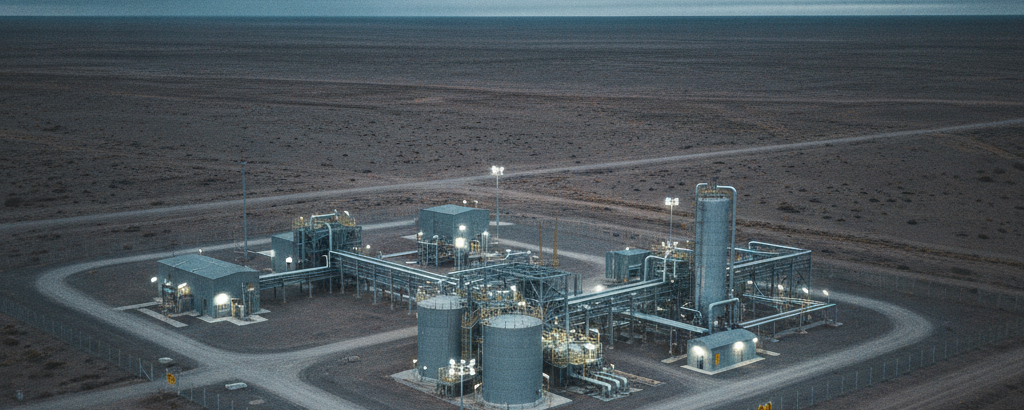
Critical Minerals: From Niche Term to Strategic Resource
April 29, 2026
Why Dozens of Junior Miners Are Drilling at the Same Time
May 3, 2026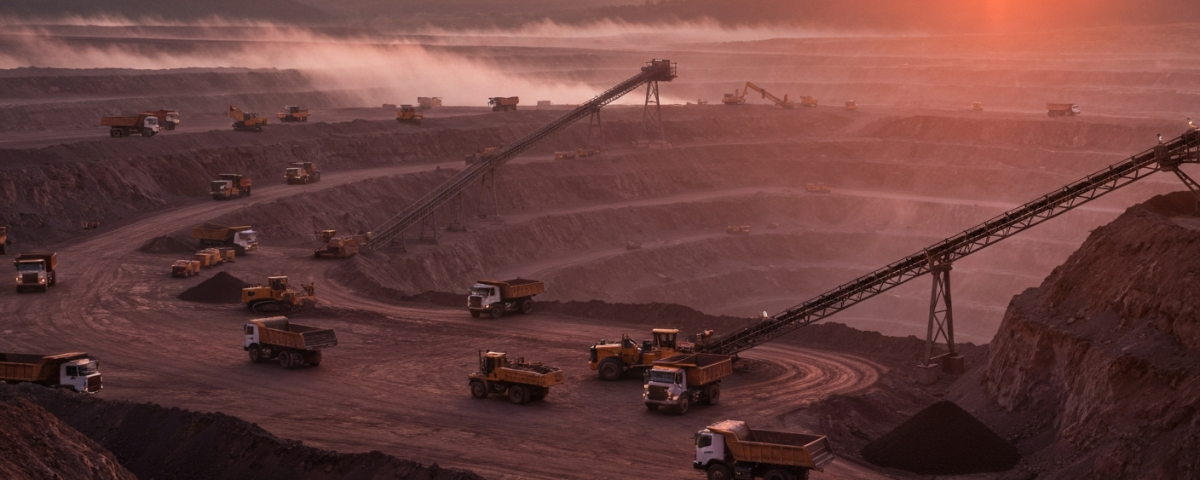
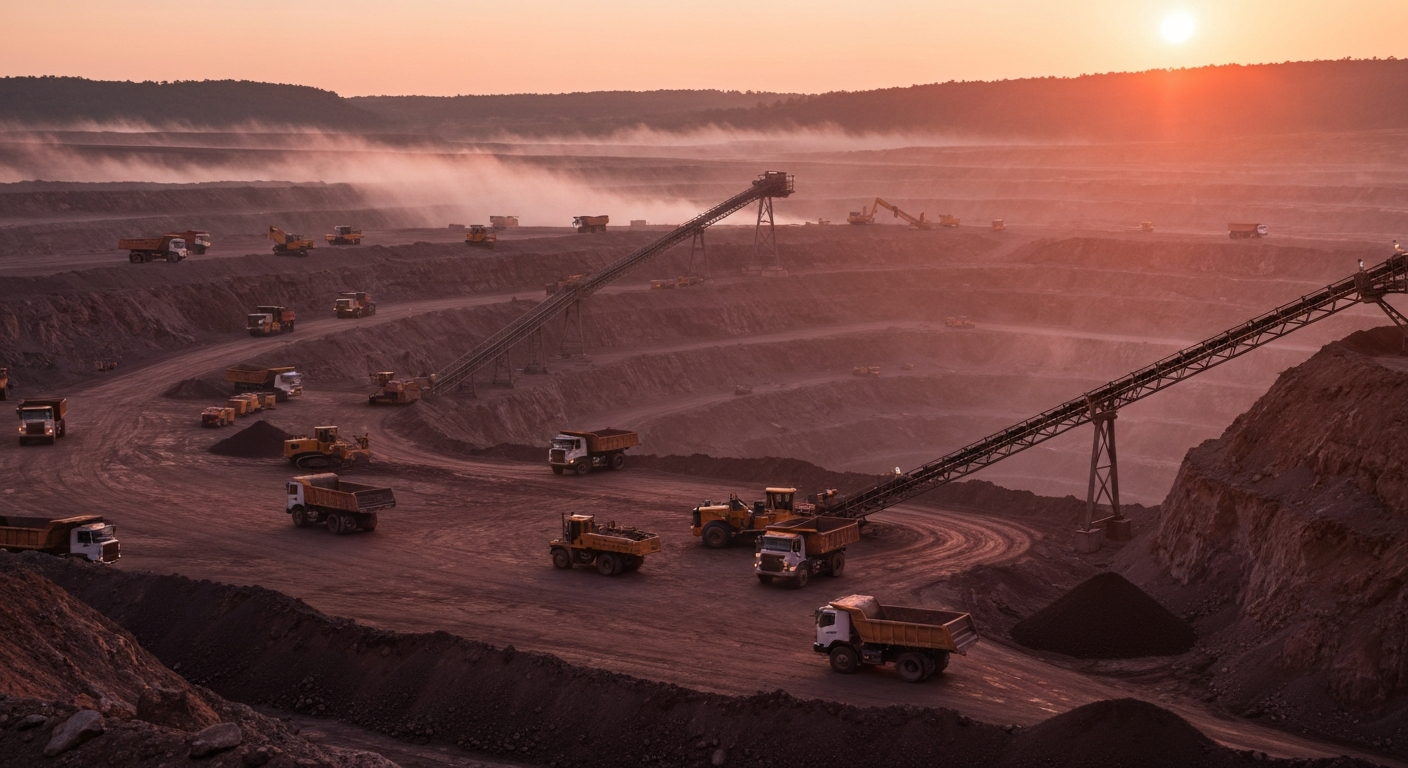
When Commodities Become a Matter of National Strategy
There are moments when economic trends and geopolitical realities collide — and that is precisely what is happening right now in the world of critical minerals. Terms like rare earths, niobium, germanium, or tungsten may still sound abstract to many newcomers. Yet these raw materials form the invisible backbone of modern technology: they are found in electric vehicles, wind turbines, semiconductors, defense systems, and medical devices. Without them, the energy transition grinds to a halt.
What was once a niche within the mining sector has today become a strategic priority for governments in North America, Europe, and Australia. Numerous junior explorers have deliberately repositioned their portfolios over recent months, placing a stronger focus on exactly these minerals. This article explains why — and how investors who are just starting out can make sense of this trend.
From Supply Chain Risk to National Security Issue
To understand the current exploration boom, one must take a step back. A large share of global production of critical minerals is concentrated in just a few countries — most notably China, which holds a dominant market position in rare earths, germanium, and tungsten. This concentration has set off alarm bells in Western nations: whoever controls the supply chain also controls the industries that depend on it.
In response, the United States, Canada, the EU, and other countries have launched programs that actively support domestic exploration and extraction of critical raw materials. Subsidies, tax incentives, and streamlined permitting processes are intended to help bring new deposits into development. For junior explorers — small mining companies in early stages of development — this means that those sitting on the right minerals in the ground suddenly have political tailwinds behind them.
Junior explorers are particularly active in geologically promising regions of Canada, such as the Canadian Shield and northern Ontario, where pegmatite systems frequently host niobium and rare earths. Intensive drilling is also underway in regions with known copper-nickel belts. The activity is measurable: many companies are announcing multi-phase exploration programs with dozens of drill holes and thousands of meters drilled — a clear sign of increased capital commitment across the sector.

Niobium, Germanium, Tungsten: What Makes These Minerals Special
Not all critical minerals are alike — they differ in their geological availability, their technological applications, and their geopolitical sensitivity. An overview helps to build understanding:
| Mineral | Key Application | Notable Characteristic |
|---|---|---|
| Rare Earths | Permanent magnets, electric drivetrains | Production heavily concentrated in Asia |
| Niobium | High-strength steel, superconductors | Often found in pegmatite systems alongside rare earths |
| Germanium | Semiconductors, fiber optic cables, infrared optics | Rare by-product of zinc production |
| Tungsten | Hard metals, defense industry | One of the hardest known raw materials |
| Copper & Nickel | Batteries, electric motors, infrastructure | High demand driven by electric mobility |
What many of these minerals share: they are often difficult to separate, occur in low concentrations, and require complex processing. This makes their exploration technologically more demanding than, say, gold or silver. That makes a recent development from the technology world all the more significant: AI-assisted geology is beginning to change the way explorers identify potential deposits.
European start-ups in the field of geological artificial intelligence have recently raised substantial venture capital to accelerate exploration processes. By analyzing vast geological datasets — from satellite imagery to historical drilling data — promising target areas can be narrowed down faster and more cost-effectively. In a sector where every meter drilled costs money, this can be a decisive advantage.
Key Takeaways for Investors Just Starting Out
The shift toward critical minerals is not a short-term phenomenon — it is structurally anchored in the energy transition and in geopolitical realignments. Investors who are new to junior explorers in this space should understand a few fundamental relationships.
First: not every company that features the words “critical minerals” in its name or communications actually has a geologically compelling project. Rebranding or repositioning toward trendy commodities is a well-known phenomenon on smaller stock exchanges such as the TSX Venture Exchange. Investors should always review technical reports, drilling results, and management qualifications.
Second: multi-phase exploration programs — those that proceed systematically from geophysical surveys through surface sampling to core drilling — are a positive sign of structured, methodical work. Companies that deploy airborne geophysics (such as electromagnetic surveys conducted from aircraft) to prioritize drill targets are operating with methodological rigor.
Third: the difference between a mineral occurrence and an economically mineable deposit is enormous. Many exploration projects never become mines. This is not the exception — it is the statistical rule in the junior mining sector. Critical minerals do not change that reality; they merely raise the strategic interest and potentially the demand, once a project can demonstrate economic viability.
The current moment is nonetheless significant: governments, industry, and capital markets are, for the first time, speaking a common language about supply security. This creates an environment in which well-positioned junior explorers receive more attention — and potentially more financing options — than in previous cycles. For those learning about small-cap investing, this trend is an instructive example of how macroeconomic forces shape the micro-world of individual exploration companies.
Key Terms for Getting Started
- Critical Minerals
- Raw materials classified as both economically significant and at risk of supply disruption. The exact list varies by country but typically includes rare earths, lithium, cobalt, niobium, germanium, and tungsten.
- Rare Earth Elements (REE)
- A group of 17 metals that, despite their name, are not geologically rare — but are rarely found in concentrations viable for mining. They are indispensable for permanent magnets used in electric motors and wind turbines.
- Pegmatite
- A coarse-grained igneous rock that frequently contains unusually high concentrations of minerals such as niobium, tantalum, lithium, or rare earths. Pegmatite systems are therefore a primary exploration target.
- Airborne Geophysics (e.g., VTEM)
- A method of remotely sensing geological structures from the air. VTEM (Versatile Time-Domain Electromagnetic) measures electromagnetic signals and helps identify conductive mineralization in the subsurface — without moving a single drill rig.
- Junior Explorer (Junior Miner)
- A small mining company in an early project stage, focused primarily on the discovery and advancement of mineral occurrences. Junior explorers typically have no production revenues and finance themselves through equity raises.
- TSX Venture Exchange (TSX-V)
- Canada’s growth-oriented stock exchange, where the majority of the world’s junior explorers are listed. The TSX-V is considered the most important global center for financing exploration companies.
- Earn-In Agreement
- A contractual model in which a company acquires the right to earn a stake in a project incrementally — by meeting defined expenditure thresholds (e.g., exploration work or cash payments) — without having to purchase the interest outright from the start.
⚠️ Important notice: This article is for informational and educational purposes only. It does not constitute investment advice, a recommendation, or a solicitation to buy or sell any security. Investments in small-cap exploration and mining companies carry a high risk, including the potential total loss of capital. Before making any investment decision, consult a registered financial advisor and conduct your own analysis. Boersen Post Team is not responsible for decisions taken based on the content published here.