Lithium in Europe: What Scandinavia Means for the Supply Chain
June 8, 2026
Maiden Drilling: What First Results Reveal in Rare Earths Projects
June 8, 2026

The invisible metal behind high-performance technologies
Scandium rarely makes headlines. The silvery-white metal with atomic number 21 trades on no major commodity exchange, has no futures contract, and seldom appears in investor portfolios. Yet in the laboratories and production facilities that power the digital economy, scandium has long been indispensable.
Even minute additions to aluminum alloys — typically under 0.5 percent — boost strength, corrosion resistance, and weldability substantially. This matters in aerospace, vehicle manufacturing, and increasingly in data center components. Two other applications have grown more important: solid oxide fuel cells (SOFCs) use scandium-stabilized zirconia as a key electrolyte material, and advanced electronics rely on its properties in ways other elements cannot replicate.
For investors exploring small-cap mining stocks, scandium illustrates how technological shifts in energy efficiency, AI infrastructure, and decarbonization can suddenly make overlooked projects economically relevant.
Supply tightness and emerging demand
Global scandium supply is minuscule relative to copper or lithium: annual demand sits in the hundreds of tonnes. China dominates production, chiefly as a byproduct of titanium and rare earth extraction. Russia and Ukraine were historical suppliers, but this changed after 2022. The supply side remains constrained.
Demand, by contrast, is shifting. Data centers building high-performance infrastructure need lightweight, high-strength materials for enclosures and cooling systems. Scandium-bearing aluminum alloys perform better than conventional alternatives here. SOFCs, which convert hydrogen or natural gas to electricity, require scandium-stabilized zirconia to operate efficiently at lower temperatures. Western defense budgets are also allocating more capital to lightweight alloys with specific mechanical properties, a sector that has expanded amid the rearmament cycle.
The pattern resembles vanadium a few years back. When redox flow batteries emerged as a storage option, vanadium prices spiked far more sharply than other industrial metals, simply because supply could not adjust quickly. Scandium may follow the same trajectory.

ASX exploration companies in the scandium space
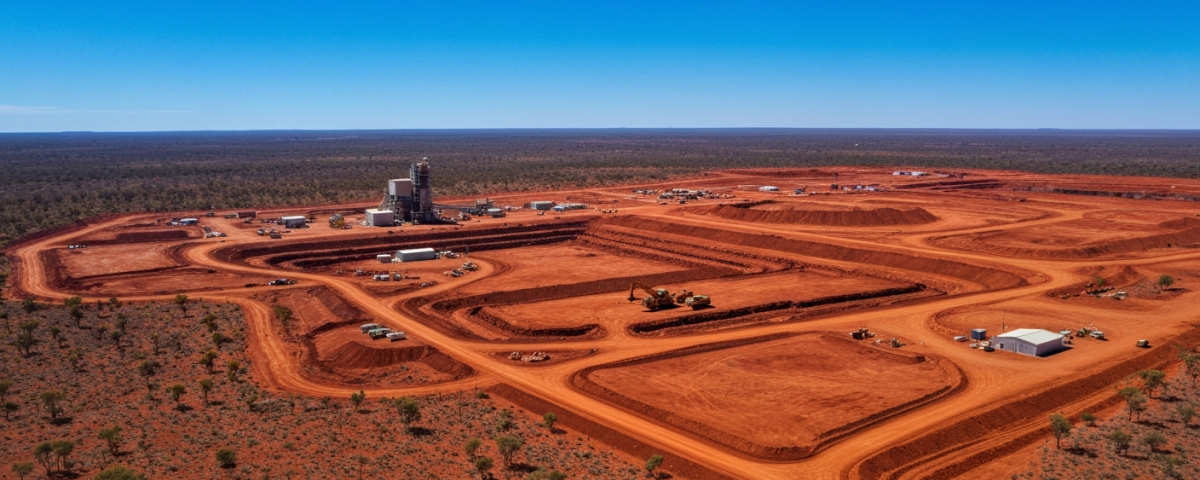
Several ASX-listed junior explorers have established scandium projects in Australia over the past few years. The country offers advantages: favorable geology, stable legal frameworks, transparent reporting standards under the JORC Code, reliable property rights, and established capital markets for mining companies.
These explorers operate at different stages of development. The JORC Code classifies mineral resources into categories—Inferred, Indicated, and Measured—each with different confidence levels. An Inferred Resource carries far greater risk than a company with a completed feasibility study. Investors must understand these distinctions to compare projects fairly.
| Project stage | Typical characteristic | Risk level |
|---|---|---|
| Early exploration | Geochemistry, initial drilling | Very high |
| Resource definition | JORC resource (Inferred/Indicated) | High |
| Scoping/PFS | Initial economic analysis | Medium-high |
| Feasibility study (DFS) | Bankable project assessment | Medium |
| Permitting/construction | Financing requirements, regulatory approval | Medium-low |
Junior explorers fund themselves through capital raises—issuing new shares to investors. In a niche market like scandium, their ability to raise capital at attractive valuations depends on institutional interest and technology company partnerships. An offtake agreement with an end buyer can strengthen the financing case considerably by signaling real commercial demand.
From expectations to share price moves
The link between scandium demand and long-term megatrends is real, but capital markets do not react in linear fashion. From the moment a technology trend becomes visible to the point where a junior explorer actually produces scandium and generates revenue, five to fifteen years typically pass. This is structural to mining, not a flaw.
For small-cap investors, the consequence is straightforward: exploration stock prices respond to expectations, not profits. A positive drilling result, an upgraded resource estimate, or a partnership announcement can drive a junior’s shares sharply higher, regardless of current cash flow. This is what capital markets theory calls option value—the market prices the possibility of future success rather than today’s earnings.
Liquidity is another concern. Low-capitalization ASX stocks often show wide bid-ask spreads and thin daily volumes. A moderate buy order can push prices higher, and selling pressure can drive them down just as fast. Position sizing in this segment should reflect this reality.
Key terms at a glance
- JORC Code
- The Australian standard for reporting mineral resources and reserves. Comparable to Canada’s NI 43-101. Resources are classified as Inferred, Indicated, or Measured; Reserves as Probable or Proven. These categories must be kept distinct.
- Thin market
- A market with low trading volume and few participants. Small changes in supply or demand can trigger sharp price movements.
- Solid oxide fuel cell (SOFC)
- A technology that electrochemically converts hydrogen or natural gas into electricity. Scandium-stabilized zirconia (ScSZ) improves cell efficiency and lowers operating temperatures.
- Offtake agreement
- A preliminary contract between a mining company and buyer that locks in future commodity delivery under set terms. Investors view this as a signal of real commercial backing.
- Option value
- The portion of an exploration stock’s share price based on the expectation of future success rather than current earnings or cash flow.
- Inferred resource
- The lowest-confidence category in a JORC resource estimate. Based on limited data and therefore subject to high uncertainty. Should never be confused with a Reserve.
- Capital raise
- The issuance of new shares to raise equity capital. The primary funding source for junior explorers, since they typically generate no production revenue.
⚠️ Important notice: This article is for informational and educational purposes only. It does not constitute investment advice, a recommendation, or a solicitation to buy or sell any security. Investments in small-cap exploration and mining companies carry a high risk, including the potential total loss of capital. Before making any investment decision, consult a registered financial advisor and conduct your own analysis. Boersen Post Team is not responsible for decisions taken based on the content published here.