Ministerial Visits as Market Signals: What Government Proximity Means for Commodity Projects
June 8, 2026
Cooperation Model in a Uranium Basin: How Juniors Pool Drill Targets
June 8, 2026
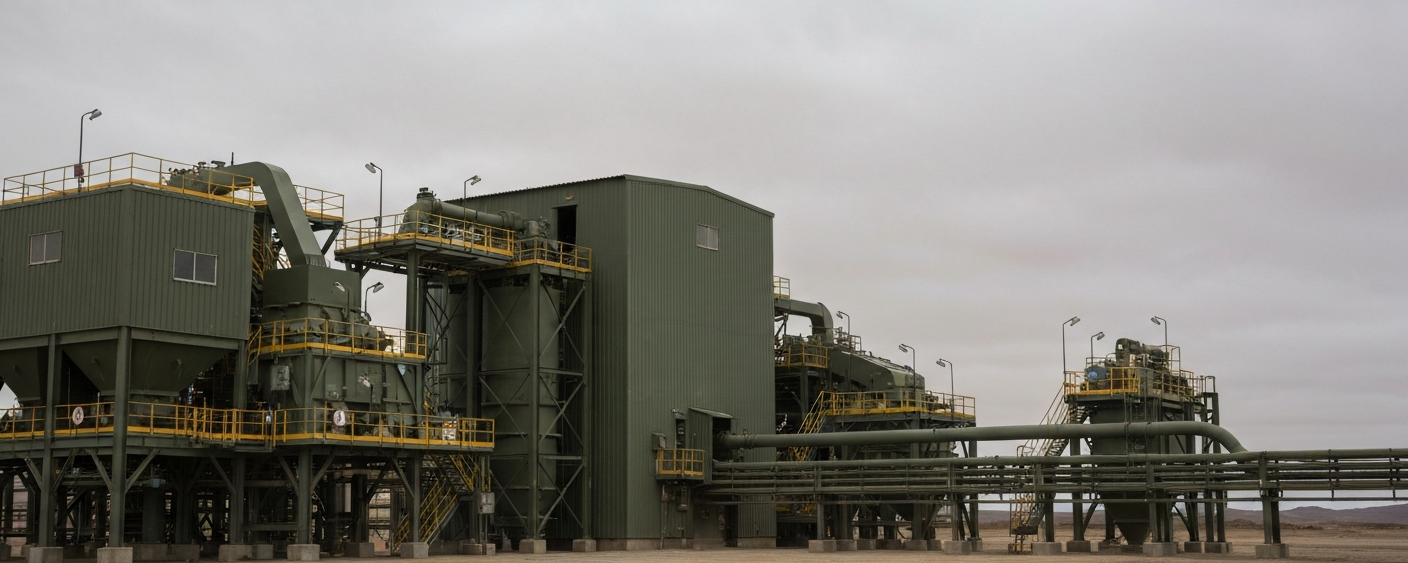
When permits fail faster than rock does
An exploration project can be mineralogically first-rate — with high grades, solid infrastructure, and promising geology — and still fail. Not because the drill hits the wrong rock, but because the local community refuses to let the shovel break ground. In the mining industry, this phenomenon is known as the absence of a Social Licence to Operate (SLO). To newcomers, that may sound abstract. But the reality is concrete: without social acceptance, even formal government permits can become meaningless, construction timelines can collapse, and financing partners can pull the emergency brake.
This dynamic is not new. But it carries particular weight in defense-related projects. When so-called dual-use commodities are involved — minerals used in both civilian and military applications — national security interests, local community politics, and international supply chain strategy converge at a single point. For junior miners active in this segment, social capital is no longer a soft metric. It is a hard risk factor.
The three-way tension
To understand why social acceptance matters so much in defense projects, it helps to map out who holds the power. Classic exploration projects operate within a relatively clear regulatory framework: drilling permits, environmental requirements, licence renewals. The permitting process is largely technical and bureaucratic.
With dual-use projects — covering commodities such as tungsten, antimony, niobium, or rare earths used in weapons systems, precision electronics, or armored equipment — a third actor moves to the foreground: the state, acting simultaneously as a strategic customer and political gatekeeper. Governments have an interest in fast-tracking permits when a project strengthens their supply security. At the same time, they are politically exposed when local conflicts escalate.
This creates pressure from three directions:
- State level: Strategic interest in resource security, export controls, and security screenings.
- Community level: Concerns about noise, water use, land loss, and the distribution of economic benefits.
- Capital market level: Investors and financiers translate permitting risk into timeline delays and higher costs of capital.
When these pressures align, a project moves swiftly through the pipeline. When one breaks, the others become unstable. An indigenous committee can block an environmental review. A stalled project frightens away institutional investors. Without fresh capital, the next drilling program never starts.

Mechanisms: how trust affects project value
How exactly does social acceptance — or the lack of it — show up in the valuation of a junior miner? Several specific mechanisms are at work.
Timeline delays as capital destroyers. Every month a project sits idle due to community protests or stalled regulatory proceedings costs money: administrative overhead, interest on bridge financing, salaries. For a small-cap company with limited cash reserves, a six-month stoppage can be existential. Well-established community engagement can significantly shorten such delays.
Access to capital as a trust signal. Institutional investors and project financiers evaluating defense-adjacent projects increasingly look for demonstrable local support through signed land-use agreements, joint economic programs, or formal consultation processes. Canada’s Impact Benefit Agreements (IBAs) offer a concrete example: these formal contracts govern economic participation, environmental monitoring, and decision-making rights. When a mining company concludes an IBA with indigenous partners, it signals to the capital market that a material risk category has been addressed. Without such an agreement, an unresolved uncertainty remains, appearing in valuation models as a risk discount.
Regulatory acceleration for strategic commodities. Western governments have introduced fast-track procedures for critical commodities in recent years. These accelerated processes require that no active local conflicts exist. A project with a secured social licence can benefit from this regulatory fast-track. A project in perpetual conflict with local residents falls through the cracks, even if its geology is outstanding.
| Factor | High trust | Low trust |
|---|---|---|
| Permitting timeline | Shortened (fast-track possible) | Extended (objections, litigation) |
| Cost of capital | Lower risk premium | Higher risk premium |
| IBA / consultation status | Secured or agreed | Open or disputed |
| Eligibility for government support | High (critical commodities) | Limited |
| Reputational risk | Low | High (ESG pressure) |
What this means for analyzing defense juniors
For investors focused on small caps in the defense space, this calls for a broader analytical perspective. Traditionally, the spotlight fell on drill results, resource estimates (under NI 43-101 or JORC), and metal grades. These metrics remain important, but they tell only part of the story.
An analogous situation is familiar from the oil industry: two drilling license areas may be technically equivalent, yet the one located in a politically stable, consensus-oriented region commands a measurable valuation premium over the one in a conflict-prone zone. In the mineral exploration space, this premium — or discount — is increasingly made explicit, for example in risk reports that list community relations as a distinct category.
Another dimension involves the duration of relationships. Trust does not build overnight. Companies that have been present in a region for years, conduct regular consultations, and demonstrably deliver on economic participation commitments hold a structural advantage over new entrants. This is an intangible competitive edge: difficult to replicate, but readily observable.
Trust as a structural advantage
This shift runs deeper than commodity cycles. Western governments are under pressure to diversify and localize supply chains for defense commodities, driven by dependence on Asian producers and broader security-policy concerns. This creates a new dynamic: projects once considered too risky or too complex are suddenly moving into strategic focus. At the same time, that very government attention increases political pressure at the community level, because residents know their consent now carries more weight.
In this environment, companies that treat social acceptance as a strategic investment rather than a bureaucratic obligation will operate from a position of strength. It is clear that the “soft skills” of management — communication, local engagement, conflict prevention — have long since become part of the due diligence process. Ignoring this risks not only project delays, but also loss of access to the capital that is driving defense projects throughout this decade.
Key terms explained
- Social Licence to Operate (SLO)
- The informal but practically binding social consensus that allows a company to carry out a project in a given region. Not legally enforceable, but critical to smooth operations.
- Dual-use commodity
- A mineral used in both civilian and military applications — for example, tungsten in cutting tools and armor-piercing projectiles, or rare earths in electric motors and guided missiles.
- Impact Benefit Agreement (IBA)
- A formal contract between a mining company and a local or indigenous community that governs economic participation, employment, environmental monitoring, and decision-making rights. Widely regarded as a strong signal of social acceptance.
- Fast-track procedure
- An accelerated regulatory permitting process introduced by governments for projects of strategic relevance, such as critical commodities for defense. Generally requires that no active local conflicts exist.
- Risk premium
- The additional return that investors demand in exchange for taking on higher risk. Projects with unresolved social conflicts typically carry a higher risk premium, which raises the cost of capital for the company.
- Due diligence
- The systematic review of a company or project prior to an investment decision. Today this encompasses not only geological and financial factors, but also social and regulatory aspects.
- NI 43-101 / JORC
- Technical standards for reporting on mineral resources. NI 43-101 applies in Canada; JORC applies in Australia. Both draw a clear distinction between resources (geological estimates) and reserves (economically extractable quantities) — terms that must not be used interchangeably.
⚠️ Important notice: This article is for informational and educational purposes only. It does not constitute investment advice, a recommendation, or a solicitation to buy or sell any security. Investments in small-cap exploration and mining companies carry a high risk, including the potential total loss of capital. Before making any investment decision, consult a registered financial advisor and conduct your own analysis. Boersen Post Team is not responsible for decisions taken based on the content published here.