Frontier Jurisdiction Malawi: What ASX Investors Need to Know
June 8, 2026
Titanium in Semiconductors: A Niche Metal with Strategic Punch
June 8, 2026

When iron is only half the story
When most people think of iron ore, they picture blast furnaces, steel beams, and bridges — not semiconductor fabrication plants or energy storage systems. Yet that association is changing: new drill results from the Radar Critical Minerals Project in Labrador, Canada, show how an iron-rich formation can simultaneously host significant quantities of titanium and vanadium — two elements increasingly important in modern technology.
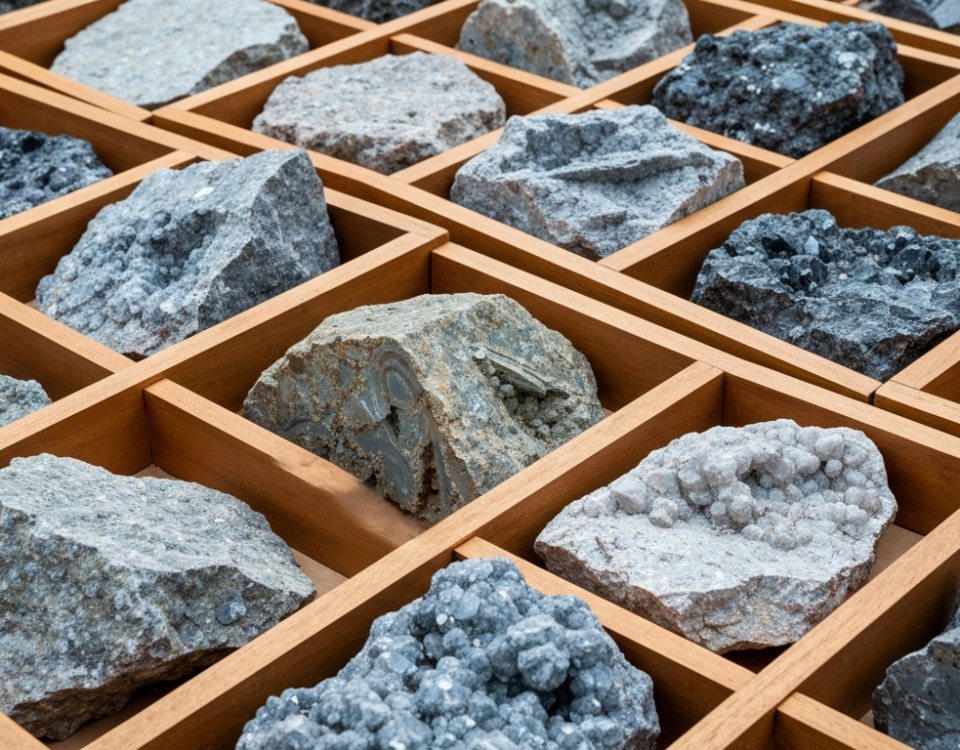
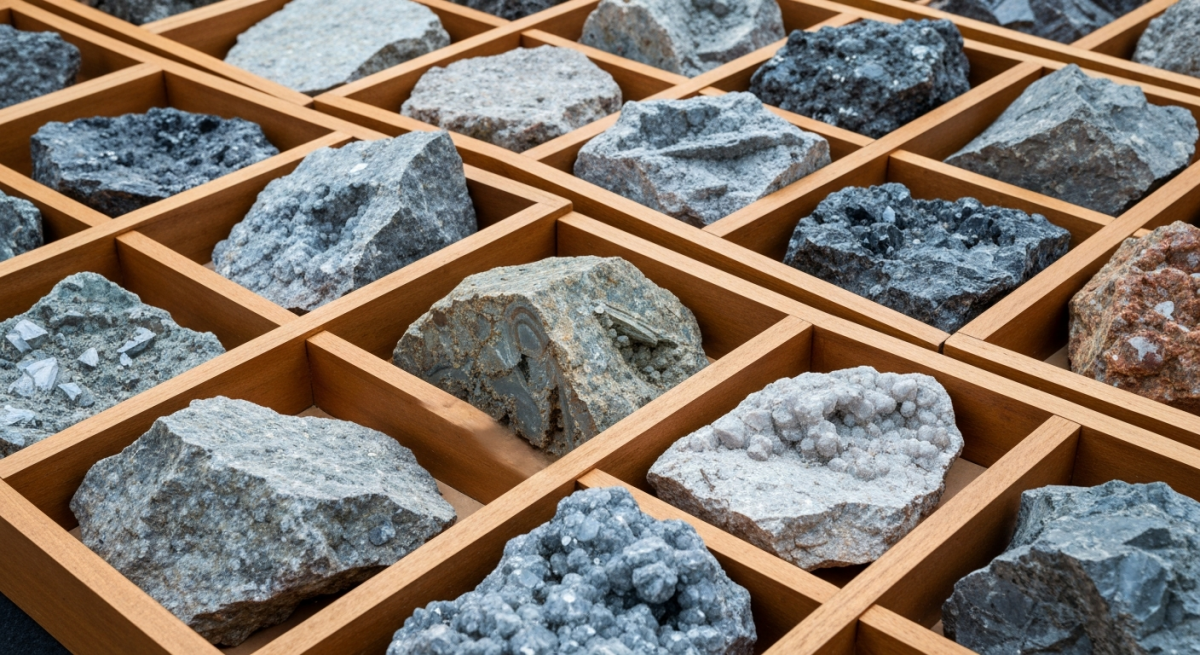
A Canadian junior explorer has published assay results from five drill holes of its initial drilling program aimed at producing a maiden mineral resource estimate (Maiden Mineral Resource Estimate). According to published technical reports, the grades reported from the so-called Trapper South Zone include iron oxide (FeO) up to 51.20%, titanium dioxide (TiO₂) up to 7.94%, and vanadium pentoxide (V₂O₅) up to 0.340%. This combination moves the project beyond a conventional iron ore venture into the critical minerals space that governments and industrial corporations worldwide are prioritizing.
For those new to junior exploration, an immediate question arises: why does the presence of titanium and vanadium change the character of a project, and what does that mean for how capital markets assess its value?
Titanium, vanadium, and the logic of critical supply chains
Understanding the significance of these elements requires looking at their industrial applications and why supply security in this segment has become politically and economically sensitive.
Titanium is required for aircraft turbines and medical implants. Titanium dioxide (TiO₂) also serves as a precursor for titanium tetrachloride, which is used in chemical vapour deposition (CVD) during semiconductor manufacturing. Thin-film coatings in chips require high-purity titanium compounds — a segment that grows directly with demand for logic chips and memory devices.
Vanadium is gaining importance through a different technology: vanadium redox flow batteries (VRFBs) are among the most promising options for large-scale stationary energy storage, such as grid stabilization for renewable energy. Unlike lithium-ion batteries, VRFBs can operate for decades with negligible capacity loss. The vanadium content in the electrolyte can be recovered — a circular economy advantage that regulators increasingly recognize.
Both elements appear on the critical minerals lists of the EU, the United States, and Canada. This means that government funding programs, offtake agreements, and accelerated permitting processes can potentially become available.

Multi-element assays and project valuation
The mechanism this case study illustrates is known as multi-commodity valuation. A project assessed purely on iron ore grades would struggle to compete globally against large Australian or Brazilian producers. The element combination changes the equation.
A simple comparison: imagine a mineral deposit containing ten percent copper — economically valuable on its own. If that same deposit also contains molybdenum, rhenium, and silver in meaningful grades, the potential net operating value per tonne increases considerably. The same applies to titanium-vanadium-iron systems: the combination of several critical elements within a single ore body can shape a project’s economics differently than any single commodity alone — provided metallurgical processes permit joint recovery.
Multi-element projects carry structural complexity. Separating titanium, vanadium, and iron concentrates requires specific metallurgical processes that can be expensive. Investors should pay close attention to subsequent metallurgical studies. These determine whether geological grades can actually translate into economically recoverable products.
The laboratory results from Labrador also reveal a structural fact: the initial drilling program targets a Maiden MRE — the first formal resource estimate under the NI 43-101 standard. This milestone transforms a purely exploratory anomaly into a quantifiable category that institutional investors and potential acquirers can evaluate.
| Element | Role in technology | Criticality status |
|---|---|---|
| Titanium (TiO₂) | CVD coatings in semiconductors, pigments, lightweight alloys | EU, USA, Canada: critical |
| Vanadium (V₂O₅) | Redox flow batteries, steel alloying, catalysts | EU, USA, Canada: critical |
| Iron (FeO) | Steel, base material for ferrovanadium and ferrotitanium | Bulk commodity, but carrier matrix for the above |
Canadian jurisdiction and risk profile
Labrador, Canada’s easternmost mainland region, is geologically well known for mafic and ultramafic intrusive rocks — precisely the rock types in which titanium-vanadium-iron mineralizations typically occur. The Labrador Trough and adjacent crustal blocks host some of the most prominent iron ore formations in North America.
For investors, jurisdiction is an independent valuation factor. Canada is internationally regarded as one of the most politically stable mining regions, with transparent regulation, established permitting processes, and a functioning capital market ecosystem for junior explorers (TSX Venture Exchange). Its risk profile differs substantially from comparable projects in less stable regions.
Geopolitical context adds weight: following the U.S. Inflation Reduction Act and the EU Critical Raw Materials Regulation, many offtakers explicitly prefer projects located in stable, “friendly” jurisdictions. Canadian critical minerals projects benefit from this preference — not because the geology is superior, but because supply chain priorities are being set by policy.
An analogy: when the EU began prioritizing lithium sources outside China in 2023, Scandinavian projects that were not geologically exceptional suddenly gained easier access to financing discussions. The dynamic is identical — jurisdiction plus critical mineral status creates heightened attention from institutional players.
What small-cap investors should understand
The Labrador case illustrates several principles for beginners in small-cap mining.
First: assay results require context. A high FeO grade alone says little about the strategic value of a project. Only when combined with titanium and vanadium, and placed within current supply chain priorities, does the distinction between an iron ore project and a critical minerals candidate become apparent.
Second: exploration stage matters. A Maiden MRE marks an early milestone. Significant work remains before a project reaches an economic feasibility study (PEA or PFS). Market reactions to assay announcements often reflect expectations, not confirmed economic viability.
Third: multi-element projects are analytically more demanding than single-commodity ventures. The potential value creation is broader, but so is the metallurgical complexity. Investors who understand this can more accurately interpret project announcements.
From a market perspective, the pattern is clear: where critical minerals, a stable jurisdiction, and active drilling converge, institutional participants take notice of new data. This lowers the attention threshold for capital market engagement, though it does not automatically drive share price gains.
Key terms for beginners
- Assay result
- A laboratory analysis of drill core samples to determine the grade of metals or minerals, expressed as a percentage (%) or grams per tonne (g/t). Assays form the foundation of every resource estimate.
- Maiden MRE (Maiden Mineral Resource Estimate)
- The first formal estimate of a project’s mineral resources under an international standard (e.g., NI 43-101 in Canada). It classifies resources as Inferred, Indicated, and Measured based on data density and confidence level.
- Multi-commodity project
- An exploration project in which several economically relevant commodities occur together. Advantage: higher potential project value. Disadvantage: more complex metallurgical processing.
- Vanadium redox flow battery (VRFB)
- A battery technology in which vanadium ions in a liquid electrolyte serve as the energy storage medium. Particularly suited for large-scale stationary storage, characterized by long service life and high cycle stability.
- CVD (Chemical vapour deposition)
- A process used in semiconductor manufacturing in which thin layers of material are deposited onto wafer surfaces. Titanium compounds are required as precursor materials in this process.
- Critical minerals
- Raw materials classified as strategic by governments (EU, USA, Canada) because they are indispensable for key technologies and simultaneously subject to supply risk. Titanium and vanadium appear on all three lists.
- NI 43-101
- The Canadian regulatory standard for public disclosure of mineral resources and reserves. It requires that all technical disclosures be verified by a qualified person.
⚠️ Important notice: This article is for informational and educational purposes only. It does not constitute investment advice, a recommendation, or a solicitation to buy or sell any security. Investments in small-cap exploration and mining companies carry a high risk, including the potential total loss of capital. Before making any investment decision, consult a registered financial advisor and conduct your own analysis. Boersen Post Team is not responsible for decisions taken based on the content published here.